
Winning at the Table: Mastering the Art of Workplace Negotiation

Let's face it, negotiation in the workplace can feel intimidating. Maybe you've even had experiences where negotiations felt one-sided and have left you feeling undervalued or unheard. Really, we've all been there. But here's the good news: negotiation is a skill anyone can learn, and Konseye: The Mentorship Network is here to help you master it.
The Negotiation Battles You Might Be Facing in the Workplace:
Achieving professional goals often requires navigating negotiations, these battles are ones that effective negotiation skills can counter with the outcome significantly impacting your career trajectory.
Here are a few situations that require effective negotiation skills:
Salary Negotiation: Whether you're a recent graduate or a seasoned professional, negotiating a fair salary can be nerve-wracking. You deserve to be compensated for your skills and experience, but how do you confidently ask for what you're worth?
Promotion Negotiation: You've been putting in the extra hours, exceeding expectations, and finally, that promotion opportunity arrives. But the discussion of responsibilities and compensation feels…murky. How do you ensure your hard work translates into a well-deserved promotion with proper recognition?
Project Negotiation: You have a brilliant idea for a project, but securing the budget and resources requires convincing your manager or colleagues. How do you present your case in a way that garners buy-in and support?
Work-Life Balance Negotiation: The line between work and personal life can easily blur. Negotiating flexible work arrangements, remote work options, or well-deserved vacation time can feel like a minefield. How do you advocate for your well-being without jeopardizing your professional standing?
Common Negotiation Challenges:
The professional world thrives on collaboration and mutual benefit, but even with the understanding that negotiation is a common aspect of professional life, many people still hesitate from stepping into it and this reluctance can stem from a variety of internal battles.
Here's what might be holding you back:
Fear of Rejection: The possibility of a "no" can be paralyzing. However, remember that negotiation is a conversation, not a confrontation. A "no" doesn't mean the end, it just means you need to adjust your approach and offerings.
Lack of Confidence: You might feel underprepared to negotiate, especially if you're facing someone with more experience or authority. Remember, knowledge is power.
Imposter Syndrome: You might doubt your worth or the validity of your requests. This is a common feeling, but it shouldn't stop you from advocating for yourself. Focus on the value you bring to the table and use data and evidence to support your arguments.
A Quick Guide to Winning Negotiations
We've unpacked the anxieties that might hold you back from negotiating. Overcoming the fears of negotiation is the first most important step to winning through any negotiation, after you've dealt with the internal struggle, here are some key strategies to handle the externalities:
Preparation is Key:
Do your research: Know your industry standards, salary ranges for your position, and company policies. Back up your arguments with facts and figures. Salary reports, project projections, and positive performance reviews can strengthen your case. This data will become the very foundation for your confidence.
Define your goals: Be clear on your desired outcome before entering the negotiation. What are your non-negotiables? What are you willing to compromise on?
Anticipate counter-arguments: Think through what the other party might say and prepare your responses well ahead.
Effective Communication:
Focus on collaboration: Frame all negotiations as a win-win situation. Highlight the benefits your proposal brings to the company.
Communicate clearly and confidently: Speak with conviction, but be respectful. Active listening is crucial – understand the other side's perspective.
Practice:
Practice, practice, practice: Role-playing negotiation scenarios with a friend or mentor can build your confidence and communication skills.
Negotiation is an Ongoing Process:
Be prepared to walk away: Know your bottom line. If the other party doesn't meet you halfway, be prepared to politely decline and revisit the discussion later.
Negotiation doesn't end with a handshake: Document the key points agreed upon to avoid misunderstandings later.
Learn from each experience: Every negotiation is a learning opportunity. Reflect on what worked well and what could be improved for future interactions.
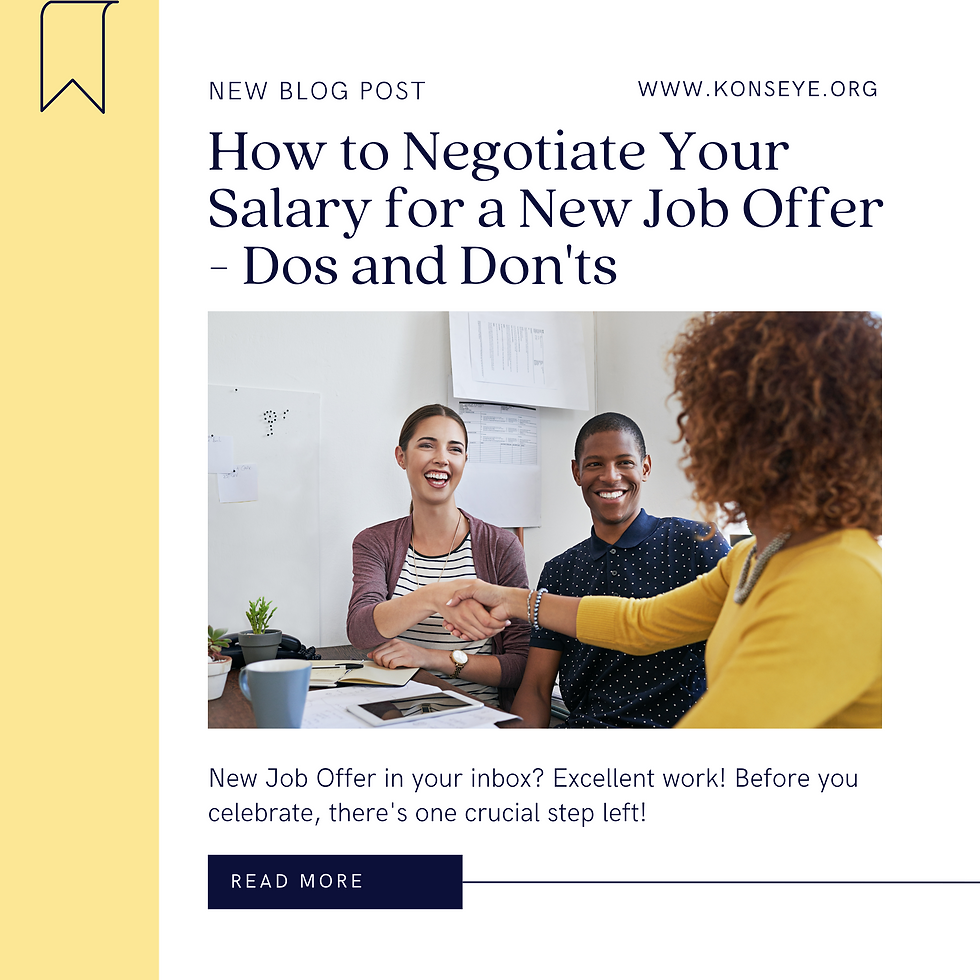
Remember, you are not alone! Keep abreast on what next you can try to better execute your negotiations. Just got a new job offer and not sure how to negotiate the salary? Start with this article in the Konseye Wisdom Library “How to negotiate your salary for a new job offer - Dos and Don’ts.” You can find a wealth of resources on the Konseye platform to help you better hone your skills and become a confident advocate for yourself.
Remember, with the right network anything is possible!
Tolani Olawore.
Team Konseye.


Negotiation is truly an ongoing process, unless values no longer align.